

Museum merchandise types that drive sales and engagement
TL;DR:
- Selecting culturally authentic, mission-aligned merchandise enhances visitor engagement and strengthens brand identity.
- Core categories like exhibit apparel, jewelry, Judaica, and educational products drive sales and cultural storytelling.
- Limited edition and exhibit-specific items create excitement, urgency, and higher impulse purchase rates.
Selecting the right merchandise for a museum gift shop is one of the most strategic decisions a curator or shop manager can make. The products you choose must balance cultural authenticity, visitor appeal, and real revenue potential, all at once. Museum store trends for 2025 point toward personalization, sustainability, and mission-driven curation as the defining forces shaping successful shops. For Israeli museums especially, the stakes are higher: your visitors arrive with deep cultural expectations, and your merchandise is often their most tangible memory of the experience. This guide walks you through a practical framework for evaluating options, explores the most effective merchandise categories, and helps you build a mix that celebrates identity while driving meaningful sales.
Table of Contents
- How to evaluate museum merchandise: Key criteria for Israeli shops
- Core merchandise categories: What every museum gift shop should offer
- Culturally relevant and local items: Enhancing connection and exclusivity
- Exhibit-related and limited edition items: Fostering excitement and urgency
- Comparison of popular merchandise types: Sales, engagement, and mission fit
- Expert perspective: Merchandise as mission-driven storytelling
- Discover unique Israeli-themed merchandise for your museum shop
- Frequently asked questions
Key Takeaways
| Point | Details |
|---|---|
| Mission-driven selection | Products should reinforce the museum’s mission and tell a deeper story to visitors. |
| Cultural resonance wins | Merchandise connected to local traditions and Israeli heritage performs best in gift shops. |
| Limited editions boost sales | Exclusive, exhibit-tied items and event launches drive higher impulse and repeat purchases. |
| Avoid generic merchandise | Generic, low-quality products can harm museum prestige and underperform financially. |
| Balance variety and curation | The best shops blend core categories with culturally unique and exclusive items for maximum impact. |
How to evaluate museum merchandise: Key criteria for Israeli shops
Before you place a single order, you need a clear evaluation framework. Merchandise decisions made without criteria tend to produce cluttered shelves, slow-moving inventory, and missed opportunities to connect with visitors on a deeper level.
The first criterion is mission alignment. Every item in your shop should reinforce what your museum stands for, whether that is education, cultural preservation, artistic expression, or historical memory. A shop that sells generic tourist trinkets alongside carefully curated Judaica sends a mixed message to visitors and weakens your brand.
The second is cultural resonance. In the Israeli context, this means understanding the difference between items that genuinely reflect heritage and those that merely gesture toward it. Authentic Judaica, locally crafted jewelry, and artisan pieces rooted in Israeli tradition carry weight that mass-produced alternatives simply cannot match. Our guide to Israeli-themed merchandise explores this distinction in detail.
Third, consider your visitor demographics. Are your visitors primarily international tourists, Israeli families, school groups, or academic researchers? Each group responds differently to price points, product types, and storytelling approaches. A shop near a Holocaust memorial will serve a very different audience than one inside a contemporary art museum.
Financially, smart managers track two key metrics: RPV (Revenue Per Visitor) and ATP (Average Transaction Price). Data-driven merchandising shows that RPV can exceed ATP by 20 to 50 percent when shops curate thoughtfully, because visitors buy multiple smaller items rather than one large one.
Here are the core evaluation criteria at a glance:
- Mission and educational alignment
- Cultural authenticity and storytelling value
- Visitor demographic fit
- Quality and craftsmanship standards
- Financial metrics: RPV, ATP, and margin
- Sustainability and ethical sourcing
- Personalization potential
- Inventory manageability, including limited editions
Pro Tip: Before finalizing any new product line, ask yourself: “Would a visitor display this item at home and tell the story behind it?” If the answer is yes, you have a winner. If the answer is no, reconsider.
Also pay attention to museum shop trends pointing toward blended learning kits, AR-enhanced products, and wellness items. These are not gimmicks. They reflect a genuine shift in what visitors expect from a museum experience, and your merchandise should reflect that shift.
Core merchandise categories: What every museum gift shop should offer
With a solid evaluation framework in place, you can build a baseline assortment that reliably performs across visitor types and seasons. The strongest museum shops anchor their inventory around a few proven categories, then layer in specialized items for depth and differentiation.
Exhibit-themed apparel remains a top performer. T-shirts, tote bags, scarves, and socks printed with exhibit imagery or museum branding give visitors a wearable connection to their experience. These items travel well, photograph beautifully, and serve as walking advertisements for your institution.
Jewelry and accessories are where cultural storytelling really takes center stage. Enamel pins, keychains, and necklaces inspired by Israeli heritage symbols offer affordable, giftable options that appeal to a wide age range. Explore Israeli heritage enamel pins as a starting point for understanding how these items can carry genuine meaning.
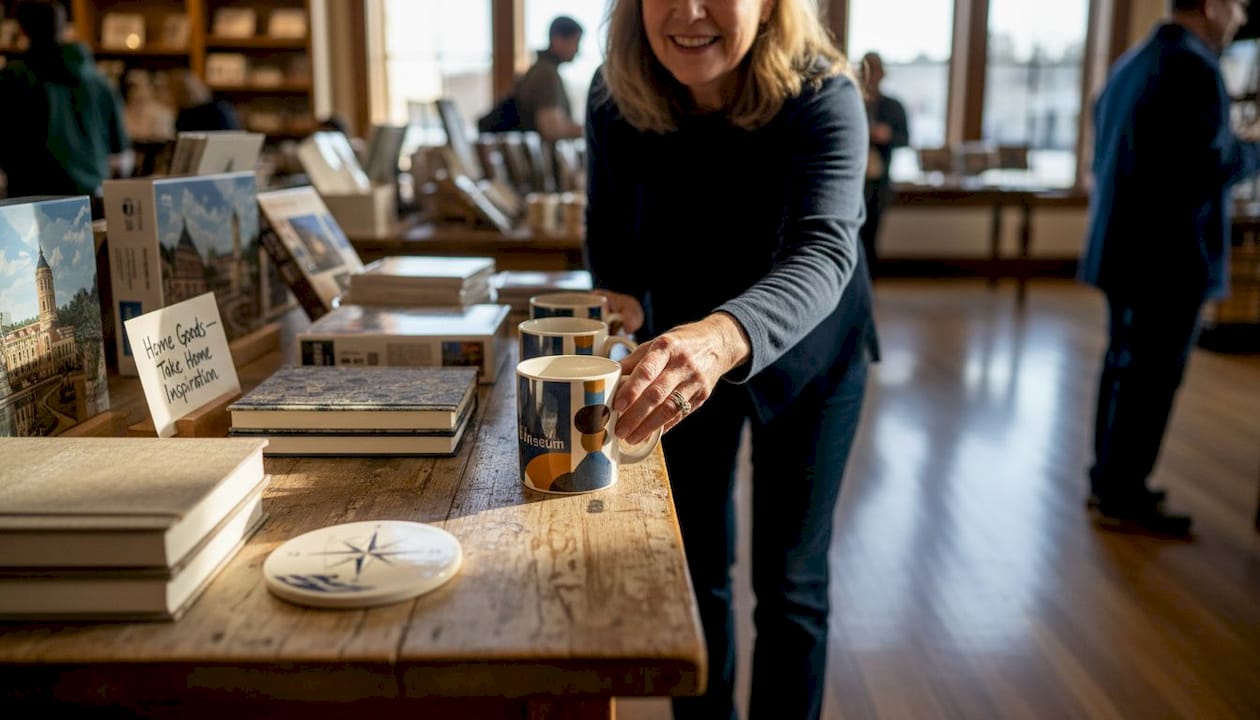
Home goods such as mugs, coasters, journals, and puzzles serve the domestic market well. Israeli families visiting on weekends often gravitate toward items they can use at home, especially when those items carry a meaningful design or quote from an exhibit.
Educational products including books, flashcards, and DIY kits align perfectly with museum missions. They extend the learning experience beyond the gallery walls and are especially popular with parents and teachers.
Replicas and figurines carry artistic and historical weight. A well-crafted replica of an artifact from your collection can become a treasured keepsake, particularly for international visitors.
For Israeli shops specifically, Judaica deserves its own spotlight. Mezuzahs, Miriam cups, Shabbat sets, and similar items connect visitors to living Jewish tradition in a way that few other merchandise categories can. For inspiration on how to frame these as meaningful gifts, see Israeli icon gift ideas.
“The most powerful museum merchandise does not just remind visitors of what they saw. It continues the conversation the exhibit started, bringing the museum’s mission into everyday life.”
The top merchandise categories also now include wellness products like aromatherapy sets and guided journals. These feel especially relevant in a post-pandemic cultural landscape where visitors seek both enrichment and restoration.
Culturally relevant and local items: Enhancing connection and exclusivity
Core categories build a reliable foundation, but the shops that truly stand out go further. They invest in hyper-local, culturally resonant merchandise that visitors simply cannot find anywhere else.
Israeli museum shops like the ANU Museum of the Jewish People have set a strong example by emphasizing Judaica, locally crafted jewelry, books, Ahava-themed wellness products, and Israeli-made artisan pieces. This approach transforms the gift shop from a retail afterthought into a cultural destination in its own right.
Here are five concrete ways to add culturally meaningful merchandise to your assortment:
- Source local Judaica directly from Israeli artisans, prioritizing handmade pieces over factory-produced alternatives.
- Partner with fair-trade cooperatives to offer Israeli crafts that carry ethical provenance stories visitors can share.
- Tie specific items to current exhibits, creating a sense of exclusivity and narrative continuity between the gallery and the shop.
- Feature Israeli wellness brands like Ahava, whose products connect to the land itself and resonate with both local and international visitors.
- Collaborate with emerging Israeli artists to create shop-exclusive prints, pins, or ceramics that cannot be purchased anywhere else.
This approach to cultural branding with pins and similar accessories also strengthens your museum’s identity as a guardian of Israeli heritage, not just an institution that displays it.
Pro Tip: Plan a limited-edition product launch to coincide with a major exhibit opening or national holiday. Scarcity drives urgency, and culturally timed releases generate both media attention and meaningful spikes in foot traffic to your shop. Read more about Israeli-themed brand impact to see how this plays out in practice.
Culturally specific merchandise also elevates your museum’s prestige. When visitors see that your shop carries thoughtfully sourced, locally made items, they perceive your institution as a serious cultural authority. That perception translates directly into higher average transaction values and stronger word-of-mouth recommendations.
Exhibit-related and limited edition items: Fostering excitement and urgency
If you want to create genuine excitement in your shop, exhibit-related and limited-run merchandise is your most powerful tool. These items transform the shopping experience from passive browsing into active participation in something exclusive.
Limited-edition exhibit tie-ins are proven drivers of impulse purchases. A visitor who loved a particular gallery installation is far more likely to buy a pin, print, or tote bag that directly references that experience than a generic souvenir with your museum’s logo.
Coordinating product launches with exhibit openings is both an art and a science. Announce new items in your pre-opening marketing, display them prominently at the gallery exit, and set a clear end date for availability. This approach creates a narrative arc that keeps visitors engaged from their first ticket purchase to their final stop at your register.
Here is a realistic look at how limited versus regular merchandise performs:
| Merchandise type | Average margin | Impulse buy rate | Visitor engagement | Mission fit |
|---|---|---|---|---|
| Regular apparel | 40-50% | Moderate | Medium | Medium |
| Standard Judaica | 35-45% | Low to moderate | High | High |
| Exhibit-specific pins | 50-65% | High | Very high | Very high |
| Limited edition prints | 45-60% | High | High | High |
| Generic souvenirs | 30-40% | Low | Low | Low |
Seasonal peaks such as holidays, school breaks, and major exhibit openings can boost museum shop sales by 20 to 60 percent. Timing your limited releases to align with these windows amplifies their impact significantly.
Avoid the trap of relying on generic or low-quality items to fill gaps in your inventory. These products actively undermine your museum’s prestige and signal to visitors that the shop is an afterthought. Instead, use museum branding pins and educational pin tools as models for how small, affordable items can carry enormous cultural and commercial weight.
Comparison of popular merchandise types: Sales, engagement, and mission fit
With a clear picture of each merchandise category, it helps to compare them directly so you can make informed decisions about your product mix.
| Category | Sales margin | Visitor engagement | Mission fit | Cultural value | Best for |
|---|---|---|---|---|---|
| Exhibit apparel | High | Medium | Medium | Medium | All museums |
| Enamel pins and keychains | Very high | High | High | High | All museums |
| Judaica | Medium to high | High | Very high | Very high | Israeli museums |
| Educational kits | Medium | Very high | Very high | High | Family and school visitors |
| Limited edition prints | High | High | High | High | Art and history museums |
| Generic souvenirs | Low | Low | Low | Low | Not recommended |
| Wellness products | Medium | Medium | Medium | Medium | Contemporary and wellness museums |
The key insight here is that mission-driven curation consistently outperforms pure commerce thinking. Shops that chase margins on generic items typically see margins of 8 to 20 percent, while shops that prioritize cultural value and storytelling generate stronger RPV, higher repeat purchases, and better visitor satisfaction scores.
For Israeli museums, the ideal mix leans heavily toward Judaica, locally made crafts, exhibit-specific accessories, and culturally resonant pins and keychains. Supplement these with educational products and limited editions to drive urgency and engagement. Explore unique icon gift ideas for concrete examples of how this mix can look in practice.
Key takeaways for your decision-making:
- Prioritize cultural authenticity over volume
- Use limited editions strategically to create urgency
- Track RPV alongside ATP for a complete financial picture
- Align every product with your museum’s specific narrative
- Refresh your assortment seasonally to maintain visitor interest
Expert perspective: Merchandise as mission-driven storytelling
At PinPerfect, we have worked with enough museum shops to recognize a pattern that rarely appears in retail guides: the shops that perform best financially are almost never the ones chasing the highest margins on the most popular items. They are the ones that treat merchandise as an extension of their curatorial voice.
Generic, mass-market items do not just underperform. They actively dilute the trust visitors place in your institution. When someone walks out of a powerful exhibit and into a shop filled with items they could buy at any airport, the emotional connection built in the gallery evaporates.
The real wins, both cultural and financial, come from small-batch exclusives, artisan collaborations, and items that carry a story only your museum can tell. Even a modest shop with a limited budget can outperform larger competitors by focusing relentlessly on mission alignment rather than volume.
Our honest recommendation: test one or two exclusive, story-driven items per exhibit cycle. Measure their performance against your standard inventory. You will likely find that these items not only sell better but also generate more meaningful visitor conversations, stronger social media sharing, and greater institutional pride among your own staff.
Discover unique Israeli-themed merchandise for your museum shop
Your museum shop has the potential to become one of the most meaningful spaces in your entire institution. The right merchandise mix transforms a simple retail area into a place where visitors extend their connection to your mission and carry a piece of your story home with them.
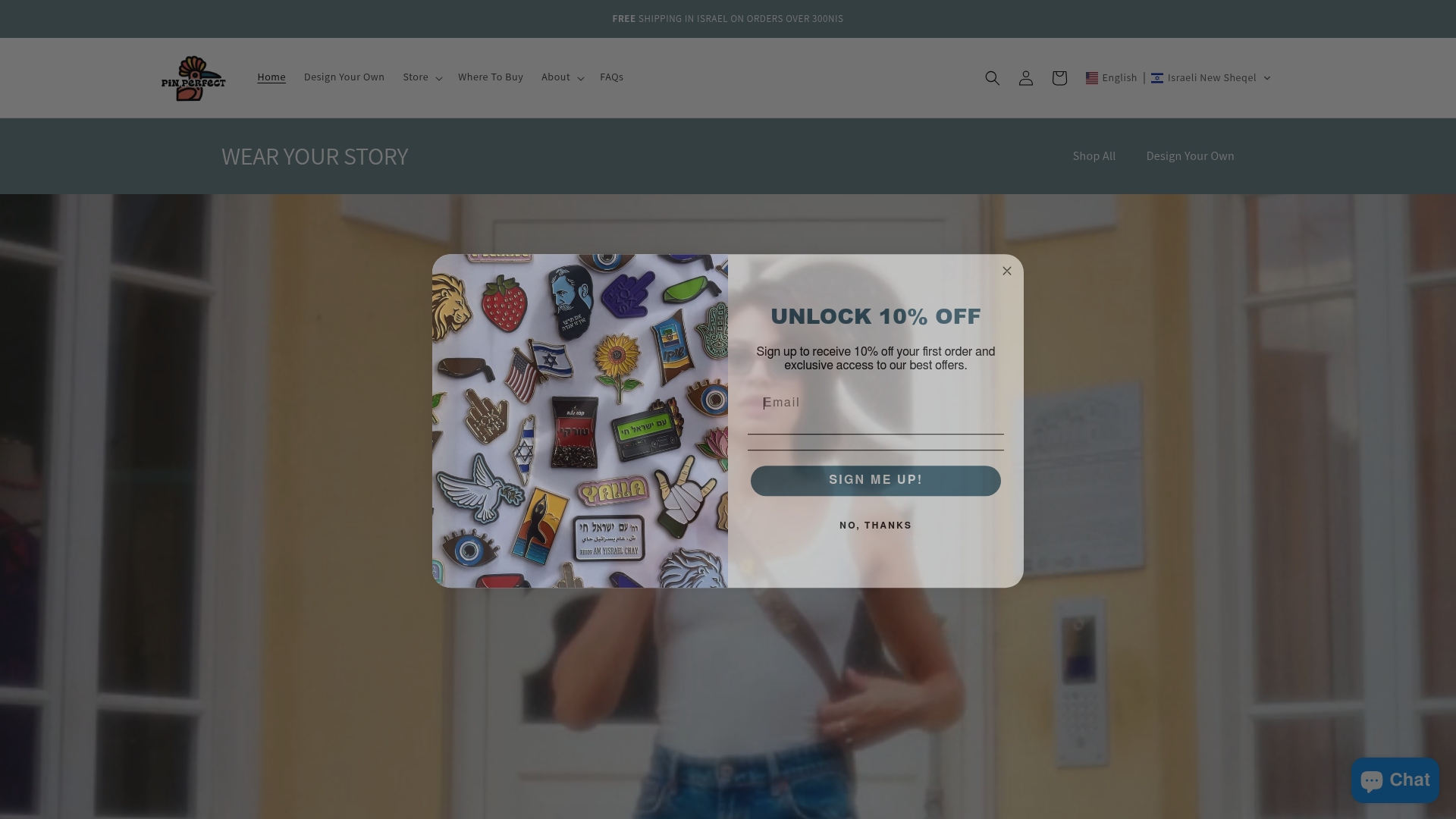
At PinPerfect, we specialize in custom enamel pins, keychains, and accessories that celebrate Israeli culture, heritage, and identity. Our Israeli flag enamel pin is one of our best-selling items for museum shops, offering an affordable, giftable piece with genuine cultural resonance. Whether you need exhibit-specific designs, wholesale quantities, or fully custom creations built around your collection, we are ready to collaborate. Shop Israeli museum gifts and discover how our products can elevate your assortment and delight your visitors.
Frequently asked questions
What merchandise sells best in Israeli museum gift shops?
Judaica, locally crafted jewelry, exhibit-themed apparel, and exclusive Israeli-made crafts consistently drive the strongest sales in Israel’s museum gift shops, combining cultural resonance with broad visitor appeal.
How can museum gift shops boost impulse purchases?
Curating limited edition items tied to current exhibits and launching them during popular events creates natural urgency that encourages visitors to buy in the moment rather than wait.
Are generic souvenirs effective for museum shop sales?
Generic, mass-produced items typically undermine a museum’s prestige and perform poorly compared to mission-driven, culturally authentic merchandise that visitors find genuinely meaningful.
What role does seasonal timing play in museum shop sales?
Seasonal peaks tied to holidays or exhibit openings can boost shop sales by 20 to 60 percent, making the timing of new product launches one of the most important levers available to gift shop managers.
Recommended
- Museum branding pins boost visitor engagement 50% – PinPerfect
- Museum pins as educational tools: proven strategies – PinPerfect
- What is promotional merchandise? Guide to brand impact – PinPerfect
- What is personalized merchandise and how it benefits brands – PinPerfect
- Why Collectibles & Blind-Box Toys Are Trending with Gen Z & Millennials in 2025 – ToylandEU